[KB7952] Enable or disable endpoint detection of potentially unwanted applications using ESET PROTECT or ESET PROTECT On-Prem

Issue

Required user permissions

This article assumes that you have the appropriate access rights and permissions to perform the tasks below.

If you are unable to perform the tasks below (the option is unavailable), create a second administrator user in ESET PROTECT or ESET PROTECT On-Prem with all access rights.

  • applications on workstations running ESET endpoint protection are falsely detected as potentially unwanted applications, suspicious applications, or potentially unsafe applications and are blocked
  • change the ESET endpoint protection settings using ESET PROTECT or ESET PROTECT On-Prem, and allow endpoint users to run specific categories of applications

Details


Click to expand
A potentially unwanted or unsafe application is a program that contains adware, installs toolbars, or has other unclear objectives. There are situations in which a user may feel that the benefits of a potentially unwanted application outweigh the risks. ESET software allows users to block or allow these programs.

Solution

Related solution: Endpoint users

  1. Open the ESET PROTECT Web Console.

  2. Edit a policy in ESET PROTECT or ESET PROTECT On-Prem.

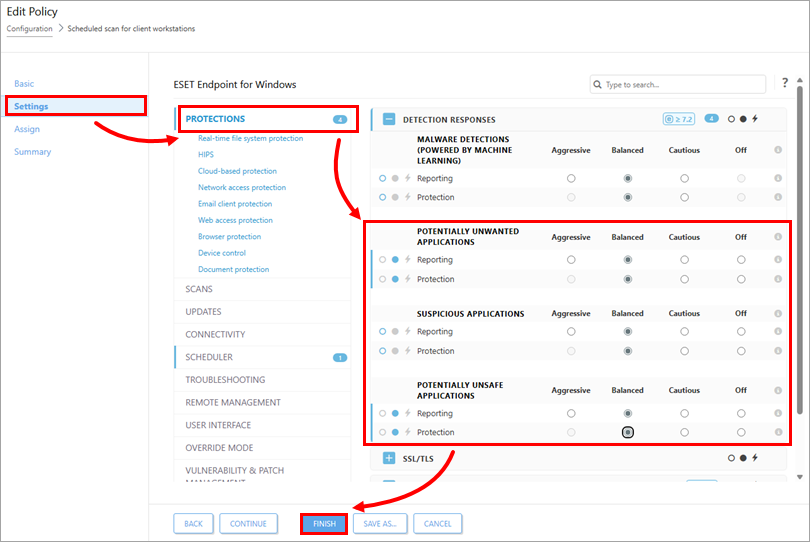
  3. Click Settings Protections, and turn on or off the detection of Potentially Unwanted Applications, Suspicious Applications, or Potentially Unsafe Applications. Select the radio button below for Aggressive, Balanced, Cautious or Off, according to your preference and click Finish.
    Detection of potentially unwanted applications is not configured error

    If the device shows the error "Detection of potentially unwanted applications is not configured", verify that your selected configurations are applied in the appropriate ESET Endpoint product policy.

    1. Open the policy, click Settings  Protections.

    2. In the Detection Responses section, verify that the circle to the left of the selected setting is blue, which indicates that the setting is applied in the policy.